
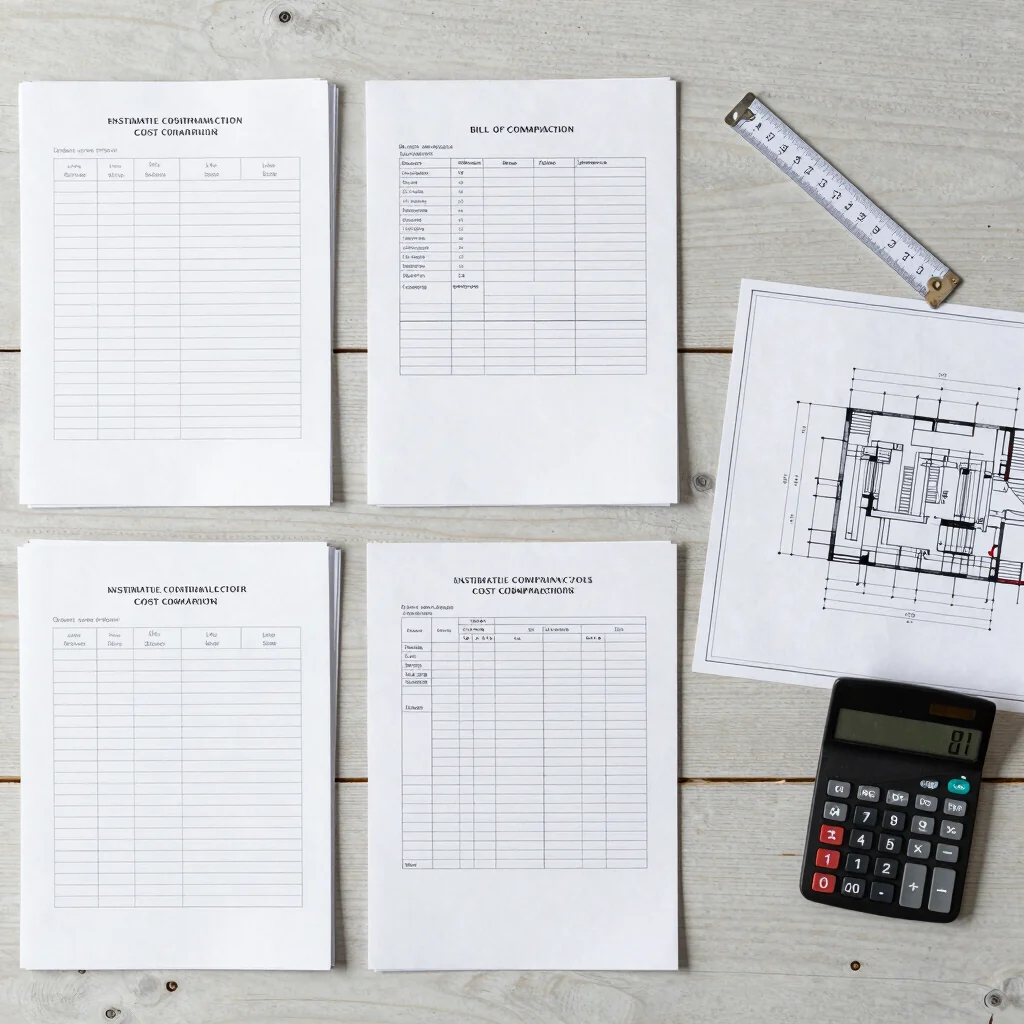
In construction, the words estimate, quotation, and Bill of Quantities are sometimes used as if they mean the same thing. They do not.
Each document serves a different purpose. Each is used at a different stage. Each carries a different level of cost certainty. When these documents are misunderstood, owners and project teams may make decisions based on the wrong type of price information.
Understanding the difference helps clients ask for the right document at the right time.
What is an estimate?
An estimate is an early cost indication. It is usually prepared when the design, scope, specifications, or quantities are still developing.
The purpose of an estimate is to help the owner or developer understand whether the project is likely to fit within the expected budget. It supports early decision-making before the project is ready for tender or contractor appointment.
At early design stage, an estimate may be based on:
- floor area
- approximate quantities
- previous project data
- early drawings
- broad specifications
- cost assumptions
- market rates available at that time
Because the information is not complete, an estimate should normally be treated as a guide, not a fixed price.
Practical example of an estimate
An owner may ask whether a proposed office renovation is likely to cost RM800,000, RM1.2 million, or RM2 million. At this stage, the drawings may still be developing and the final finishes may not be selected.
The QS can prepare an estimate to help the owner understand the likely cost range and whether the design direction is realistic for the budget.
The estimate helps answer the question: "Can this project direction fit our budget?"
What is a quotation?
A quotation is a contractor's price offer for a stated scope of work. It is commonly used for smaller works, renovation items, subcontract packages, supplier pricing, or direct procurement.
A good quotation should clearly state:
- what is included
- what is excluded
- the price validity period
- payment terms
- delivery or completion period
- assumptions
- warranty or defect obligations where relevant
- whether taxes, transport, testing, disposal, or installation are included
The risk with quotations is that different contractors may quote based on different understandings of the scope.
One contractor may include disposal. Another may exclude it. One may include temporary protection. Another may assume the client will provide it. One may price a branded material. Another may price an alternative material.
This is why quotations need to be reviewed carefully before comparison.
Practical example of a quotation
A client may ask three contractors to quote for floor tile replacement. Contractor A includes hacking, disposal, supply, installation, skirting, protection, and cleaning. Contractor B gives a lower price but excludes hacking and disposal.
If the client compares only the total quotation amount, Contractor B may look cheaper. Once the excluded items are added back, the difference may not be a true saving.
The quotation helps answer the question: "What is this contractor offering to do for this stated price?"
What is a Bill of Quantities?
A Bill of Quantities, or BQ, is a measured pricing document. It breaks the construction work into items and quantities so tenderers can price on a more consistent basis.
A BQ is especially useful for tendering because it helps contractors price the same scope in a structured format. It also helps the QS compare prices, review rates, identify missing items, and prepare tender analysis.
A BQ can also support post-contract work, including:
- progress claim assessment
- valuation of variations
- cost reporting
- final account preparation
- comparison of omitted or substituted work
The BQ helps answer the question: "What is the measured pricing basis for this project?"
Simple comparison
Estimate:
- Used for early budget planning.
- Usually prepared before full details are complete.
- Gives a cost indication or cost range.
- Useful for feasibility and design decisions.
- Not usually a contractor's final price offer.
Quotation:
- Used when asking a contractor or supplier to price a stated scope.
- Often used for smaller or specific packages.
- Must be checked for inclusions, exclusions, validity, and assumptions.
- Useful for procurement and direct comparison if the scope is clear.
- Can be risky if different contractors quote different assumptions.
Bill of Quantities:
- Used to structure tender pricing and contract administration.
- Contains measured items and quantities.
- Helps tenderers price on a common basis.
- Supports tender analysis, claims, variations, and final account review.
- More suitable for larger or more complex projects where price comparison needs discipline.
Common mistakes
One common mistake is treating an estimate as if it is a confirmed construction price. An estimate may be useful for budget planning, but it may change when drawings, specifications, and market pricing become clearer.
Another common mistake is comparing quotations without checking scope. If one quotation includes more work than another, the lower number may not be the better offer.
A third common mistake is preparing a tender without a clear pricing structure. This can make it difficult to compare tenderers, especially when the project has many trades, exclusions, or provisional allowances.
Which one should you use?
The right document depends on the project stage.
At early planning stage, an estimate may be enough to test the budget. When buying a small package or specific scope, a quotation may be suitable, provided the inclusions and exclusions are clearly checked. For a larger tender or a project where fair contractor comparison is important, a BQ can provide a clearer pricing basis.
In many projects, all three may appear at different stages. The estimate helps with the early budget. Quotations may support package pricing. The BQ supports tender comparison and contract administration.
Final thought
An estimate, a quotation, and a BQ all deal with construction cost, but they do different jobs.
Using the right document at the right stage helps reduce confusion, improve cost control, and support better project decisions.
TYH Quantity Surveying Consultant supports cost estimating, BQ preparation, tender documentation, tender analysis, contract administration, claims review, and final account matters. If you are unsure which cost document your project needs, contact TYH to discuss the project stage and scope.
Related reading
- Why a Bill of Quantities Helps Compare Contractor Prices Fairly
- 5 Reasons to Prepare a Bill of Quantities Before Tender
- Tender Evaluation Red Flags: Why Lowest Price Can Cost More
Disclaimer This article is for general quantity surveying information only. Project decisions should be based on the specific contract, drawings, tender documents, site records and professional advice for the project.